
Reporting a crime is one of the most important steps a victim can take. If you were attacked, or you saw an attack, knowing how to report an assault in Bahrain helps you protect yourself and others and helps the authorities act.
This guide explains what to prepare, the three ways to report to the police, and how to follow up. Our team at Bahrain Law Firm explains each step in simple terms.
Were you assaulted and unsure about going to the police alone? Your safety comes first. Our criminal lawyers can go with you, help you document the incident and file an official report that protects your rights.
Table of Content
How to Report an Assault in Bahrain: What to Prepare
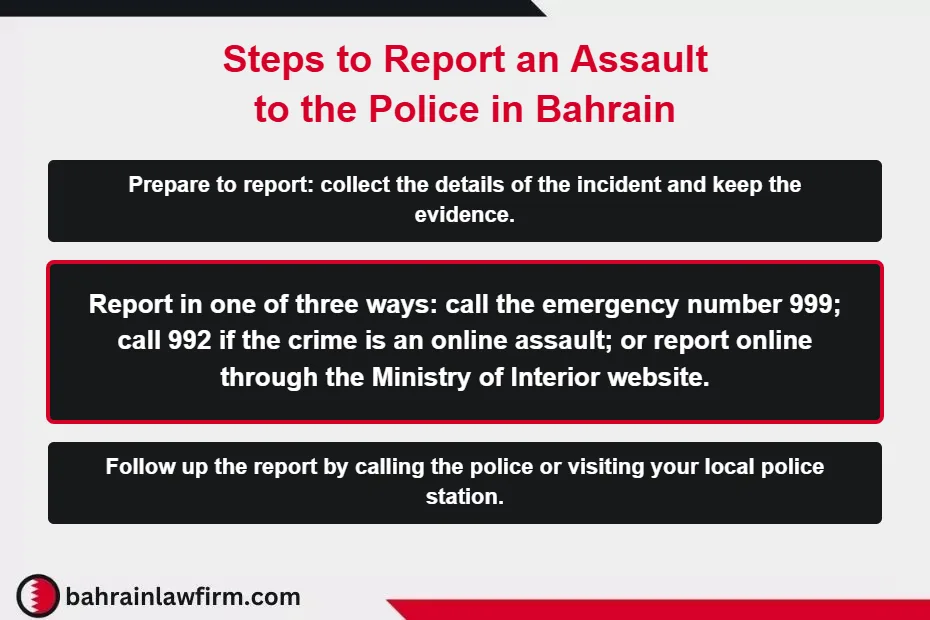
A clear report helps the police act faster. Before you report, collect the details of the incident while they are fresh in your mind.
- Details of the incident: write down everything you remember. Include the time and place, a description of the attacker and any possible witnesses.
- Evidence: keep any physical evidence, such as torn clothes or damaged items. Keep digital evidence too, such as text messages and photos.
- Medical care: if you are hurt, get medical care first and keep your medical papers. They can support your report.
Ways to Report an Assault to the Police
You can report an assault in Bahrain in three ways. Choose the one that fits your situation.
- Call 999: this is the emergency number of the police. Use it when someone is in danger or the attacker is still nearby.
- Call 992: use this number if the assault happened online, such as threats or abuse through messages or social media. It is the hotline of the Anti-Cyber Crime Directorate.
- Report online: you can file a report through the Ministry of Interior’s e-services. The national portal lists the service as Submit a report. You fill in an electronic form and attach your ID card and any documents related to the report.
How to Follow Up on Your Report
After you submit the report, follow its progress. Call the police or visit your local police station to ask about its status.
Ask for the report number so you can refer to it later. Keep a copy of every document you submit.
If the assault caused injuries, you may also want to know the punishment for the attacker. Our guide to the assault penalty in Bahrain explains it.
Get Legal and Psychological Support
An assault can affect your health and your peace of mind. Many victims feel afraid or stressed after an attack, so do not hesitate to ask for help. You can get support from non-governmental organizations and from lawyers.
A criminal lawyer can explain your rights, help you prepare your statement and follow your case with the authorities. If you are not sure how to start, a lawyer can guide you through each step. You can start by speaking to an experienced criminal lawyer in Bahrain.
Frequently Asked Questions About Reporting an Assault in Bahrain
Here are short answers to the questions people ask most.
How do I file a complaint against someone who assaulted me?
You can call the police on 999, call 992 if the assault happened online, or file a report online through the Ministry of Interior's e-services. After that, follow up with the police or your local police station.
Why is it important to report an assault?
Reporting protects the victim and other people, helps the authorities act, supports justice and discourages offenders. It also creates an official record that you can rely on later.
What do I need to file an online report?
The national portal asks you to attach your ID card and any documents related to the report. It also asks for information about the person you are reporting.
In conclusion, knowing how to report an assault in Bahrain protects you and others and supports justice. Prepare the details, choose the right channel and follow up with the police. For more help, speak to an experienced criminal lawyer in Bahrain.

A Bahraini lawyer and the founder of a legal consultancy firm established in February 2019. He holds a Higher Degree in Sharia and Law from Al-Azhar University. He has extensive experience in court representation and providing legal advice in criminal, personal status, civil, and commercial matters. He is known for delivering clear, practical, and effective legal advice aimed at protecting his clients’ rights and interests, and has achieved tangible results in notable cases, including commercial litigation and inheritance matters
