

When do you need a khula lawyer in Bahrain? Legal assistance becomes particularly important when you face a disputed agreement, financial obligations, an ongoing court case, or questions involving children’s rights. A lawyer can review the relevant documents, identify the applicable provisions of Bahraini family law, and explain the consequences before you make a decision.
Legal insight: The need for legal advice in a khula case depends on the decisions facing the parties. A proposed waiver, disputed consideration, or pending court proceeding may require an individual assessment that general legal information cannot provide.
Some situations require only an initial consultation, while others call for document review or representation before the competent court. Understanding the difference helps you choose appropriate legal assistance without confusing the requirements of khula with the services available from a lawyer.
Facing a khula agreement, financial dispute, or upcoming hearing? Get professional advice before making a decision that may affect your legal position.
Table of Content
When Do You Need a Khula Lawyer for Legal Advice?
The appropriate time to seek advice depends on the legal issue involved. Under Family Law No. (19) of 2017, khula is subject to provisions that distinguish between Sunni and Ja’fari jurisprudence. These differences may affect the requirements for ending the marriage and the financial consequences of the arrangement.
The following circumstances deserve particular attention.
1. When You Are Unsure Whether Khula Is the Appropriate Option
A wife seeking to end her marriage may have more than one legal question to consider. Determining whether khula is suitable requires examining the circumstances, the husband’s position, and any previous proceedings.
Article (95) regulates khula under the applicable jurisprudence. Reviewing the marriage contract and relevant facts helps establish whether its requirements are satisfied or whether another legal route should be considered.
2. When You Receive a Khula Agreement or Waiver
A proposed agreement may address financial consideration, the dowry, or the settlement of personal claims. Signing without understanding these provisions can create disputes about the parties’ obligations.
A legal review should examine:
- The consideration the wife agrees to provide.
- Any waiver of personal financial claims.
- The legal effect of the agreement’s wording.
- Any provisions affecting children’s rights.
Article (96) contains rules governing voluntary khula and protects certain rights from being treated as consideration. Where an agreement addresses financial entitlements, the provisions concerning women’s rights in khula in Bahrain may also be relevant.
3. When the Parties Disagree About Financial Consideration
Financial disputes may concern the return of the dowry, the amount of compensation, or obligations mentioned in a proposed settlement.
The applicable jurisprudence matters because Article (95) contains different provisions governing khula and its consideration. The marriage contract, payment records, and communications between the parties can help clarify the disputed amounts.
Children’s maintenance should be examined separately from the financial consideration agreed upon between the spouses.
4. When Children Are Involved
Custody, maintenance, and visitation may become important when a marriage ends. However, the rights of children cannot simply be exchanged for an agreement to terminate the marriage.
Article (96) of Bahrain’s Family Law restricts using children’s custody or rights as consideration for khula. Under Sunni jurisprudence, a condition requiring the surrender of custody or children’s rights is void while the khula remains valid. Under Ja’fari jurisprudence, custody cannot be relinquished as consideration where this harms the children, and their rights cannot be waived.
A proposed settlement should therefore distinguish the obligations between spouses from arrangements concerning their children.
5. When Court Proceedings Have Already Started
An existing case requires attention to the current stage of proceedings. The court may already have received a statement of claim, supporting documents, or submissions from the other party.
A lawyer can examine the case file, identify outstanding issues, and assess whether further submissions or evidence may be necessary.
Prepare the case number, hearing notices, and documents previously submitted. For information about filing and procedural stages, consult khula procedures under Bahraini law.
6. When the Marriage Has Not Been Consummated
Khula before consummation may involve questions concerning the marriage contract, dowry, and the relevant legal requirements.
Article (105) addresses specific circumstances involving a request for khula before actual consummation under Sunni jurisprudence. The legal consequences should be assessed according to the facts rather than assumptions drawn from cases arising after consummation.
7. When Previous Agreements or Foreign Documents Exist
Earlier settlements, judgments, or pending claims may influence the assessment of a new request. A lawyer should examine these records before determining the appropriate next step.
If one spouse lives outside Bahrain, additional questions may arise concerning jurisdiction, representation, and documents issued abroad. The parties’ locations and the existence of foreign proceedings are relevant facts, but they do not automatically determine which court has jurisdiction.
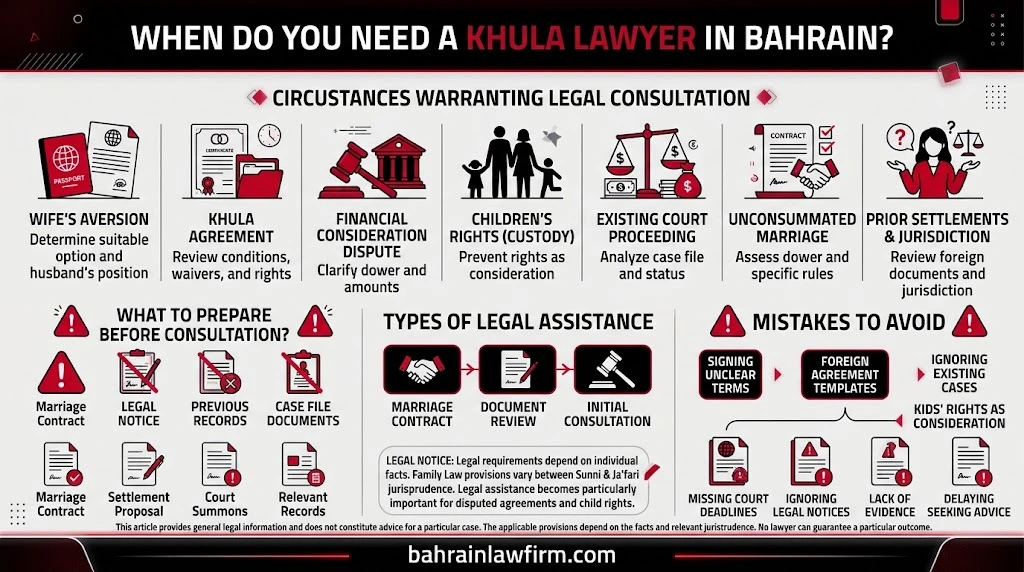
What Type of Legal Assistance Is Appropriate?
If you are wondering when do you need a khula lawyer rather than general legal information, consider the decision that requires professional assessment. A consultation does not necessarily mean authorizing full court representation.
| Situation | Suitable Assistance |
|---|---|
| Uncertainty about the appropriate legal route | Initial legal consultation |
| Proposed khula agreement | Review of contractual terms |
| Disputed financial consideration | Assessment of relevant financial documents |
| Pending court case | Case-file review and possible representation |
| Cross-border circumstances | Jurisdictional and procedural assessment |
What Should You Prepare Before Consulting a Lawyer?
Providing relevant documents helps the lawyer identify the legal questions and assess the available options. Depending on the circumstances, prepare:
- Marriage contract: Including any related agreements.
- Proposed settlement: Particularly clauses concerning compensation or waivers.
- Financial evidence: Documents relating to the dowry or disputed payments.
- Court papers: Claims, hearing notices, and judgments where applicable.
- Previous records: Settlements or proceedings connected to the marriage.
- Relevant family information: Details needed to assess matters involving children.
Arrange the documents chronologically and explain the immediate decision you face. Mention upcoming hearings or response deadlines at the beginning of your request.
What Does Bahraini Law Say About Khula?
Family Law No. (19) of 2017 provides the statutory framework for assessing khula. Several provisions are especially relevant when reviewing a proposed agreement or an existing dispute.
| Provision | Legal Significance |
|---|---|
| Article 95 — Sunni jurisprudence | Regulates khula by agreement and circumstances in which a judge may order it despite the husband’s refusal. |
| Article 95 — Ja’fari jurisprudence | Addresses the wife’s aversion, the husband’s consent, and the consideration. Khula becomes revocable if the wife withdraws the consideration during the waiting period. |
| Article 96 | Regulates voluntary khula and restricts conditions affecting custody and children’s rights. |
| Article 105 | Addresses specific circumstances concerning khula before actual consummation under Sunni jurisprudence. |
The applicable jurisprudence can change the requirements and consequences of khula. The statutory provisions should therefore be considered together with the marriage documents and individual circumstances.
What Mistakes Should You Avoid Before Seeking Advice?
Several decisions deserve caution because their legal consequences may extend beyond the immediate disagreement.
- Signing unclear terms: Understand any financial obligation or waiver before accepting it.
- Using foreign templates: Confirm that proposed wording complies with Bahraini law.
- Ignoring existing cases: Review pending proceedings before taking another procedural step.
- Mixing children’s rights with compensation: Assess these matters according to their separate legal rules.
- Missing court deadlines: Check hearing dates and official notices promptly.
These precautions are particularly important when the parties are negotiating an agreement or when legal proceedings have already begun.
Frequently Asked Questions About Khula Lawyers in Bahrain
Do I need a khula lawyer if my husband agrees?
Legal advice may still be useful when both spouses agree, particularly if the proposed arrangement includes financial consideration, a waiver, or provisions concerning children. A lawyer can explain the effect of the written terms and identify any clauses that require reconsideration.
Can I consult a lawyer without authorizing court representation?
Yes. You may request an initial consultation or review of a particular document without committing to full court representation. If further assistance becomes necessary, the scope of legal services can be discussed separately.
Can custody of the children be used as consideration for khula?
Article (96) restricts such arrangements. Under Sunni jurisprudence, a condition requiring the surrender of custody or children's rights is void although the khula remains valid. Under Ja'fari jurisprudence, custody cannot be surrendered as consideration where this harms the children, and their rights cannot be waived.
Can a wife obtain khula if her husband refuses?
Under Sunni jurisprudence, Article (95) allows the judge to order khula where the husband's refusal is unjustified and the statutory conditions are met. Under Ja'fari jurisprudence, the provision requires the husband's consent to khula. The applicable legal framework must therefore be identified before assessing the available options.
Is khula always an irrevocable divorce in Bahrain?
No single answer applies to both jurisprudential frameworks. Under Sunni jurisprudence, Article (95) treats khula as a dissolution (faskh). Under Ja'fari jurisprudence, khula is considered an irrevocable divorce, but it becomes revocable if the wife withdraws the consideration during the waiting period, as specified by the law.
Understanding when do you need a khula lawyer helps you recognize situations that require individual legal assessment. Agreements involving financial consideration, disputes over legal obligations, pending court proceedings, and matters affecting children may all justify professional advice.
Lawyer Abdulrahman Khalifa provides legal assistance in personal status matters in Bahrain. Reviewing the relevant documents and identifying the applicable provisions can help clients make informed decisions about their legal options.
Need professional advice about a khula agreement or an ongoing case? Review the available legal services and choose the assistance appropriate for your situation.
Legal Sources
Legal Notice: This article provides general legal information and does not constitute advice for a particular case. The applicable provisions depend on the facts and relevant jurisprudence. No lawyer can guarantee a particular outcome.

A Bahraini lawyer and the founder of a legal consultancy firm established in February 2019. He holds a Higher Degree in Sharia and Law from Al-Azhar University. He has extensive experience in court representation and providing legal advice in criminal, personal status, civil, and commercial matters. He is known for delivering clear, practical, and effective legal advice aimed at protecting his clients’ rights and interests, and has achieved tangible results in notable cases, including commercial litigation and inheritance matters
