

Threats are becoming more common in Bahrain, online and face to face. Many people do not know that the law punishes them. A clear understanding of the penalty protects you and helps you act in time.
This guide explains the threat penalty in Bahrain under the Penal Code, from threatening someone with a weapon to threatening to commit a crime. It also shows what a victim should do first. Our team at Bahrain Law Firm explains each point in simple terms.
Threatened with harm, or facing an unfair complaint? Do not wait while the danger grows. Our lawyers act fast to protect your rights.
Table of Content
What Is the Threat Penalty in Bahrain?
A threat is a crime in Bahrain, even if the person never carries it out. It frightens the victim and harms the safety of society. For this reason, the Penal Code (Decree-Law No. 15 of 1976) punishes threats in Articles 362 and 363.
The penalty depends on the way the threat was made and what it was about. Article 362 deals with threats made with a weapon. Article 363 deals with threats to commit a crime.
Threatening Someone With a Weapon (Article 362)
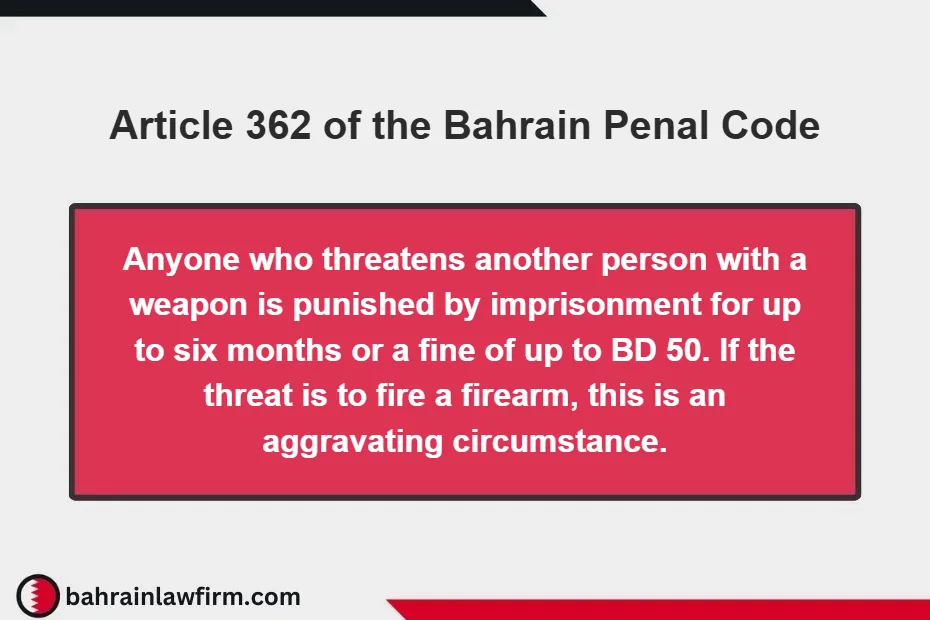
Article 362 punishes anyone who threatens another person with a weapon. The penalty is imprisonment for up to six months or a fine of up to BD 50. If the threat is to fire a firearm, the law treats it as an aggravating circumstance, which can lead to a heavier penalty.
Threatening to Commit a Crime (Article 363)
Article 363 punishes anyone who threatens another person with committing a crime. The penalty is imprisonment for up to one year or a fine of up to BD 100. The article refers to a threat made in writing, or orally through another person.
The penalty becomes imprisonment when the threat is to commit a felony against a person or property. The same applies to a threat to reveal, or to attribute to the victim, matters that harm their honor. A threat that comes with a demand or an order is an aggravating circumstance.
For example, a person who threatens to reveal shameful matters unless the victim pays money is committing this crime, with an aggravating circumstance.
What to Do If You Are Threatened in Bahrain
Report the threat to the nearest police station, in person or by phone, so that a report is opened. The police receive security reports and complaints. Bring your ID and any evidence you have.
Keep every message, screenshot, voice note and call record, and write down the date and time. Note the names of any witnesses. If the threat was made online, save the account name and the link before it is deleted.
A lawyer can file the complaint, follow the case with the Public Prosecution and protect you from a false complaint. If you were also attacked, read our guide to the assault penalty in Bahrain.
Frequently Asked Questions About Threats in Bahrain
Is a threat a crime in Bahrain?
Yes. The Penal Code punishes anyone who threatens another person with a weapon (Article 362) or with committing a crime (Article 363). The court looks at the facts of the case and the intent of the person who made the threat.
What is the punishment for threatening someone in Bahrain?
A threat with a weapon is punished by up to six months in prison or a fine of up to BD 50 (Article 362). A threat to commit a crime carries up to one year in prison or a fine of up to BD 100 (Article 363). Aggravating circumstances can lead to a heavier penalty.
Is a written or online threat punishable in Bahrain?
Article 363 refers to a threat to commit a crime made in writing, or orally through another person. Threatening messages are a written record, so keep them as evidence and show them to a lawyer. A lawyer can tell you which article applies to your case.
In conclusion, the threat penalty in Bahrain shows that the law takes threats seriously. Everyone should know the laws that protect them and report a threat early. Reporting helps keep society stable and deters those who threaten others.
This guide explained the main penalties. For more help, speak to an experienced criminal lawyer in Bahrain.

A Bahraini lawyer and the founder of a legal consultancy firm established in February 2019. He holds a Higher Degree in Sharia and Law from Al-Azhar University. He has extensive experience in court representation and providing legal advice in criminal, personal status, civil, and commercial matters. He is known for delivering clear, practical, and effective legal advice aimed at protecting his clients’ rights and interests, and has achieved tangible results in notable cases, including commercial litigation and inheritance matters
