

Do you know the rules governing Working Hours under Bahrain Labour Law? Do you often find yourself working more than eight hours a day without fair compensation? Or, as an employer, are you concerned about violating Bahrain labour regulations because of poorly organised work shifts?
Bahrain Labour Law No. 36 of 2012 sets clear rules on working hours, and failing to follow them may lead to legal and financial consequences. Working hours are therefore an important issue for both employees and employers.
The law aims to create a fair balance between business needs and employees’ rights. It regulates daily and weekly working hours and places clear limits designed to protect workers, providing a legal framework that supports a fair and healthy working environment.
Are you under pressure to work overtime without proper compensation?
Or continue reading to understand working hours and your rights in detail.
Table of Content
Working Hours under Bahrain Labour Law
Under Article 51 of Bahrain Labour Law, the standard working time is set at eight hours per day or 48 hours per week.
Employers may organise working hours in a way that suits the operational needs of the business, provided that the statutory maximum is not exceeded. Where overtime is required, specific legal rules apply to protect employees’ rights.
Exceptions to Standard Working Hours
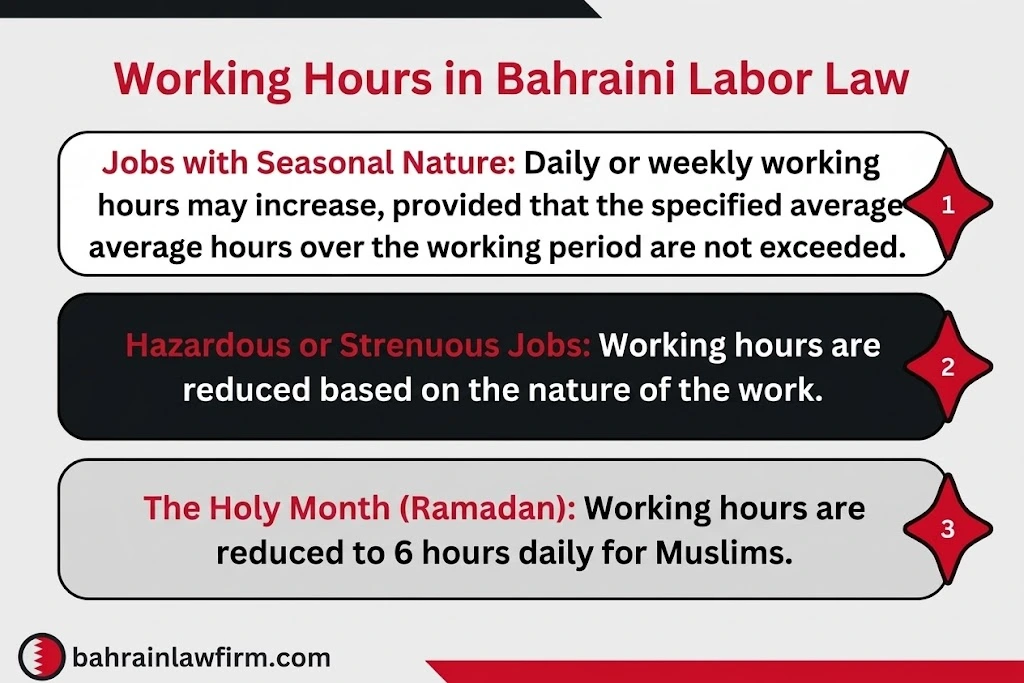
Certain types of work may require flexible or exceptional working-hour arrangements:
- Seasonal work: Daily or weekly hours may be adjusted depending on the nature of the work, provided that the legally permitted average working hours are respected.
- Hazardous or physically demanding work: Working hours may be reduced depending on the nature and level of risk involved.
- Ramadan: Working hours are reduced to six hours per day for Muslim employees.
Breaks and Rest Periods
Bahrain Labour Law requires employers to provide employees with breaks during the working day. Employees should not work for more than five consecutive hours without a break.
These rest periods allow employees to eat, rest, or perform prayers. In general, break periods are not counted as part of actual working hours.
Overtime and Its Conditions
The law regulates overtime through specific rules:
- Employee consent: Overtime should be arranged in accordance with the legal rules governing additional work, and employees’ rights must be respected.
- Overtime pay: Employees are entitled to additional compensation for overtime work. The applicable rate differs depending on whether the overtime is performed on a normal working day, a weekly rest day, or an official holiday.
- Limits on additional hours: Overtime must remain within the limits allowed by the applicable labour rules.
Special Rules in Certain Employment Situations
- Women: Employment during certain night-time periods may be subject to specific legal rules and permitted exceptions.
- Temporary employees: Working hours may vary depending on the nature and duration of the employment contract, while still remaining subject to applicable labour law requirements.
Rights and Obligations of Employees and Employers
Both employees and employers should comply with the rules governing working hours to ensure:
- Compliance with legal working-hour limits.
- Respect for employees’ rights to rest breaks and overtime compensation.
- Compliance with any special rules that apply to particular categories of employees or employment arrangements.
How Is Overtime Pay Calculated in Bahrain?
Bahrain Labour Law No. 36 of 2012 regulates overtime pay and provides employees with additional compensation when they work beyond the statutory working hours.
Under Article 54, overtime compensation is generally calculated as follows:
- On normal working days: The employee is entitled to the hourly wage plus an additional percentage calculated in accordance with the law.
- On weekly rest days or public holidays: Different compensation rules may apply depending on the circumstances and the type of day worked.
The hourly rate is commonly determined on the basis of the employee’s wage and the applicable working-hour calculation. The final overtime amount will depend on the employee’s contract, basic wage, working schedule, and the type of overtime performed.
You may also be interested in: End of Service Benefits in Bahrain.
Frequently Asked Questions
What Is the Maximum Daily Overtime Allowed?
The maximum overtime permitted per day is two hours under Bahrain law.
What Is the Penalty for Exceeding Working Hours?
Under Bahrain Labour Law, an employer who exceeds the maximum legal working hours or fails to pay overtime wages may face a fine ranging from BHD 200 to BHD 500, in accordance with Article 186 of Labour Law No. 36 of 2012.
The fine may be multiplied according to the number of affected employees, and the penalty may be increased if the violation is repeated.
Are Rest Periods Included in Working Hours?
Employers who exceed the legal limits on working hours may be subject to financial penalties. The applicable penalty depends on the nature and circumstances of the violation.
Do Working Hours or Overtime Rights Differ During the First Three Months of Employment?
No. Working hours and overtime pay rights do not change during the probation period, including the first three months of employment, under Bahrain Labour Law.
The main difference during probation concerns the possibility of terminating the employment contract by either party under the applicable conditions, rather than wages or working hours.
Working Hours under Bahrain Labour Law play an important role in balancing employees’ rights with employers’ operational needs. By setting clear limits and regulating rest periods and overtime, the law helps support a fair and sustainable working environment.
For specialised legal advice from a lawyer in Bahrain at our firm, contact us through the WhatsApp button at the bottom of the screen.
For more related information, read: Labour Court Litigation Process in Bahrain.

A Bahraini lawyer and the founder of a legal consultancy firm established in February 2019. He holds a Higher Degree in Sharia and Law from Al-Azhar University. He has extensive experience in court representation and providing legal advice in criminal, personal status, civil, and commercial matters. He is known for delivering clear, practical, and effective legal advice aimed at protecting his clients’ rights and interests, and has achieved tangible results in notable cases, including commercial litigation and inheritance matters
