
Company Liquidation Report in Bahrain is a key legal document required when a company permanently winds up its business, whether the liquidation is voluntary or compulsory.
The report sets out the company’s financial position and includes an inventory of its assets and liabilities, along with details of payments made to shareholders and creditors. But what exactly is a Company Liquidation Report in Bahrain?
When is it required? In this article, we answer these questions and explain how to prepare the liquidation report step by step. We also outline the documents required with a liquidation report in Bahrain.
We further explain the consequences of failing to submit the report or providing inaccurate information, based on the latest official regulations in Bahrain. Keep reading to learn more.
Are you concerned about winding up your company and worried about the legal consequences of preparing the liquidation report incorrectly?
Contact a Company Liquidation Lawyer NowOr continue reading first to understand all the steps at your own pace.
Table of Content
What Is a Company Liquidation Report in Bahrain?
A Company Liquidation Report in Bahrain is one of the most important legal documents used when bringing a company’s business activities to an end. It is usually prepared by the legally appointed liquidator, with legal assistance where required.
The report aims to present the company’s financial position clearly and transparently. It covers its assets, liabilities, ongoing contracts, employee entitlements, and shareholders’ rights.
It also explains how any remaining funds will be distributed after the liquidation process among creditors and partners.
- List the company’s assets and liabilities accurately.
- Identify its financial and administrative obligations.
- Explain the proposed distributions to the relevant parties.
When Is a Liquidation Report Required in Bahrain?
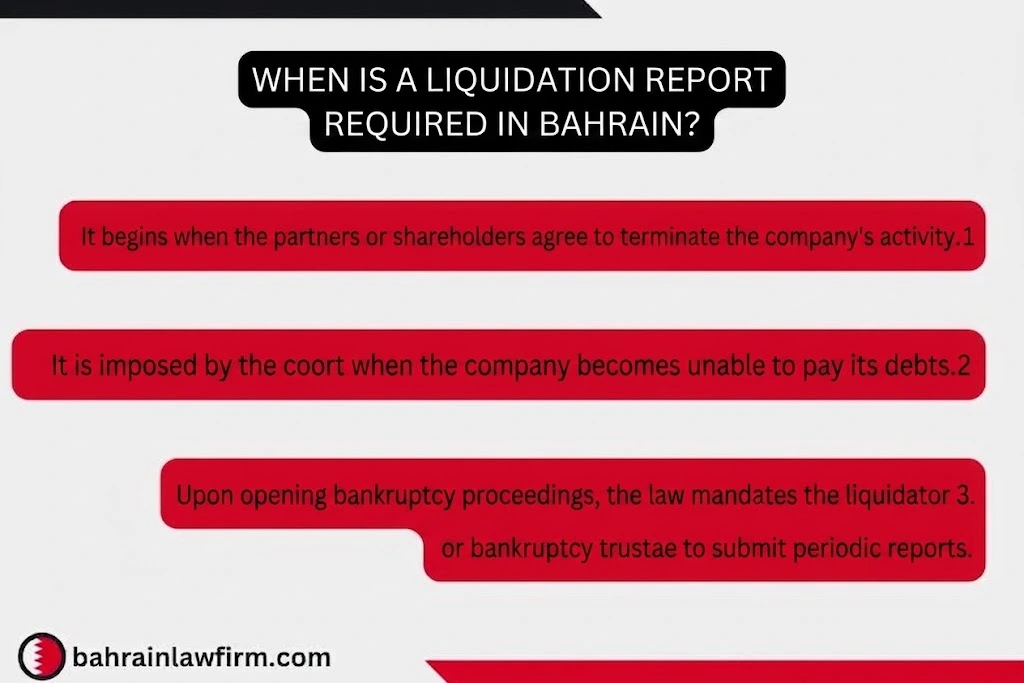
A liquidation report may be required at different stages of the legal process, depending on whether the liquidation is voluntary and approved by the partners or compulsory and ordered by a court.
1. Voluntary Liquidation
Voluntary liquidation begins when the partners or shareholders agree to bring the company’s activities to an end. In this case:
- The general assembly or partners issue a formal resolution approving the termination of the company’s business.
- A qualified liquidator is appointed, with assistance from a corporate lawyer or legal specialist where needed to handle the legal aspects of the report.
- The report is submitted to the Ministry of Industry and Commerce as part of the documents needed to register the liquidation and close the Commercial Registration.
2. Compulsory Liquidation
A court may order liquidation when the circumstances legally justify winding up the company, including cases connected with an inability to meet its financial obligations. In this situation:
- One or more creditors may file a court application seeking the dissolution or liquidation of the company where the legal requirements are met.
- The court issues its decision and may appoint a judicial liquidator.
The report then becomes essential for documenting the company’s financial position and presenting the relevant information to the court before the assets are distributed to creditors.
3. Bankruptcy and Court-Supervised Liquidation Procedures
When bankruptcy proceedings begin, the competent trustee or person responsible for administering the proceedings may be required to submit reports describing the company’s financial position and the progress of the process. These may include:
- A detailed statement of assets and liabilities.
- A record of amounts collected from outstanding receivables and expenses paid during the proceedings.
A final report may also explain how the assets were distributed among creditors and other entitled parties before the proceedings are formally closed.
If your company is facing bankruptcy, you can contact a corporate bankruptcy lawyer at Abdulrahman Khalifa Law Firm for legal assistance.
How to Prepare a Liquidation Report Step by Step
Preparing the report forms an essential part of the company liquidation process in Bahrain. The process usually starts by reviewing the company’s financial position and collecting the necessary records before preparing the final report.
The liquidator handles the report, while corporate lawyers and accounting professionals may assist with the relevant legal and financial aspects. The document should accurately reflect the company’s assets, obligations, debts, and transactions made during liquidation.
- Review the company’s financial and accounting position.
- Approve the liquidation resolution and appoint a liquidator.
- Collect financial records, contracts, and other relevant documents.
- Prepare the detailed liquidation report.
- Submit the required report and documents to the competent authorities.
Documents Required with a Liquidation Report in Bahrain
To complete the liquidation process, the competent authority may require a number of supporting documents alongside the liquidation report.
These usually include the liquidation resolution, relevant financial records, and a legal power of attorney when the application is filed through an authorised representative.
Submitting complete documents helps demonstrate that the company liquidation in Bahrain has been carried out properly and that the required procedures have been followed.
- A copy of the liquidation resolution or court judgment.
- An official power of attorney where a legal representative is involved.
- The company’s detailed financial report and supporting records.
- Proof of payment of the applicable liquidation registration fees, where required.
Consequences of Failing to Submit the Report or Submitting Incorrect Information
Failing to provide the liquidation report, or including inaccurate or incomplete information, can create serious legal and procedural problems.
The application to close the Commercial Registration may not be completed, leaving the company legally registered even though its actual business activities have stopped.
Creditors may also challenge the liquidation process or claim outstanding rights if their interests have not been properly addressed. Depending on the circumstances, the liquidator or responsible persons may face legal liability if incorrect information is knowingly or negligently submitted.
For this reason, obtaining support from a corporate lawyer can help ensure that the legal documents are prepared properly and that the liquidation process follows the required procedures.
- Failure or delay in completing the liquidation officially.
- Objections or claims by creditors and other interested parties.
- Potential liability for the liquidator or responsible persons if false or inaccurate information is submitted.
Reasons for Company Liquidation in Bahrain
Companies in Bahrain may be liquidated for several reasons. Some arise from a voluntary decision by the partners or shareholders, while others result from legal, financial, or judicial circumstances.
Once a valid reason for liquidation exists and the required decision is made, the company must begin the formal winding-up procedures and prepare the necessary reports and documents.
- Accumulated financial losses that make continuing the business impractical or impossible.
- Completion or expiry of the purpose for which the company was established.
- Serious disputes between partners that prevent the company from operating effectively.
- A court decision or another legally recognised ground for dissolution and liquidation.
As shown above, there are many reasons for company liquidation in Bahrain. If you are considering winding up a company, getting legal advice at an early stage can help you understand the procedure and your obligations.
Use the WhatsApp button to contact a specialised lawyer and legal consultant at our firm.
FAQ Abut Company Liquidation Report in Bahrain
How Long Does Company Liquidation Take in Bahrain?
The duration of company liquidation varies depending on the type of company and the complexity of its obligations. For small and medium-sized companies, the process usually takes between 3 and 6 months. However, it may take a year or longer if there are ongoing lawsuits or complex financial obligations.
Are Company Owners Released from Debts After Liquidation?
No. Company liquidation does not automatically release company owners or partners from outstanding debts. The company’s debts are first settled from its available assets. If the assets are insufficient:
1. In limited liability companies, shareholders are generally liable only up to the value of their respective shares in the company.
2. In general partnerships and limited partnerships, liability may extend to the personal assets of partners who bear unlimited liability.
Can One of the Partners Be Appointed as the Liquidator?
Yes. One of the partners may be appointed as the liquidator if the partners agree, provided that the appointment is accepted by the relevant authorities and there are no legal restrictions preventing it. A corporate lawyer or an independent expert may also be appointed to handle the liquidation process.
How Can I Verify That the Liquidation Process Has Been Completed?
You can verify the completion of the company liquidation process by:
1. Obtaining an official certificate from the Ministry of Industry and Commerce confirming the closure of the Commercial Registration.
2. Checking the company’s status through the electronic Commercial Registration system to confirm that the company has been officially deregistered.
How Much Does It Cost to Prepare a Company Liquidation Report?
The cost of preparing a Company Liquidation Report in Bahrain varies depending on the size of the company and the complexity of its financial records and obligations:
For small companies, the cost may range from BHD 300 to BHD 500.
For larger companies or businesses with multiple or complex obligations, the cost may reach BHD 1,000 or more. This may include the liquidator’s fees, preparation of the liquidation report, and related administrative expenses.
A Company Liquidation Report in Bahrain plays a central role in the liquidation process, whether the company is being wound up voluntarily by a resolution of its partners or shareholders, or through compulsory legal proceedings.
The report provides a clear picture of the company’s financial position and helps protect the rights of creditors, shareholders, and other parties involved in the liquidation.
In this article, we explained when the report may be required, how it is prepared, the supporting documents that may need to accompany it, and the possible consequences of failing to submit accurate information.
Because company liquidation can involve several legal, financial, and administrative steps, working with a qualified lawyer in Bahrain can help ensure that the process is handled correctly and that the Commercial Registration is closed in accordance with the applicable procedures.
For more information, you may also read: Limited Liability Company Formation Requirements.

A Bahraini lawyer and the founder of a legal consultancy firm established in February 2019. He holds a Higher Degree in Sharia and Law from Al-Azhar University. He has extensive experience in court representation and providing legal advice in criminal, personal status, civil, and commercial matters. He is known for delivering clear, practical, and effective legal advice aimed at protecting his clients’ rights and interests, and has achieved tangible results in notable cases, including commercial litigation and inheritance matters
